Showing posts with label Swedish-America. Show all posts

Oct 19, 2021

The Swedish Element in Illinois

 Today I came across a Google Book, 

"THE SWEDISH ELEMENT IN ILLINOIS" 

SURVEY OF THE PAST SEVEN DECADES

BY ERNST W. OLSON

Printed in Chicago in 1917 by the Swedish-American Biographical Association, I found it to be very informative. The book in its entirety can be found HERE. I was very interested in the biography of Dr. L. G. Abrahamson, the cousin of my great grandfather. He came to America as a young boy and ultimately became very influential among the Swedish immigrants of Illinois. His story is found on page 628. Click or download to your computer so you may enlarge for easier viewing.


A busy Swedish-American 
My first cousin 3X removed
Dr. Laurentius Gustaf Abrahamson
b. 2 Mar 1856 in Medåker, Västmanland, Sweden
d. 3 Nov 1946 in Rock Island, Illinois, USA


Sep 3, 2020

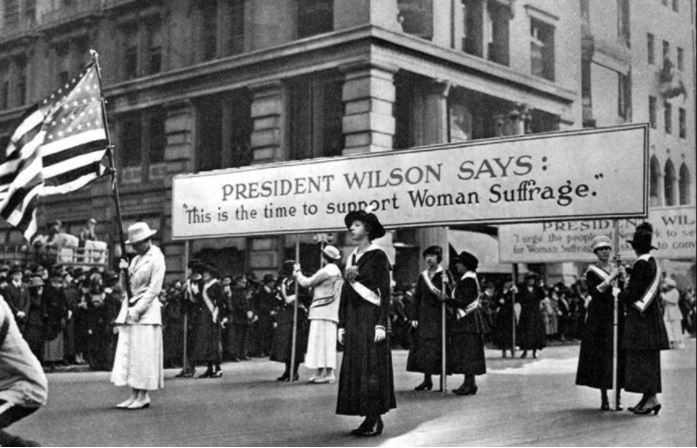
1920 passage of the 19th Amendment

Ancestry.com just introduced "STORYSCOUT telling the story of an ancestors life within the time frame of the historical events in which they lived. Wonderful idea! I share today the story of my grandmother, Lydia Kallman and the

1920 passage of the 19th Amendment
giving women to right to vote


Apparently the all male Congress were not thrilled to give their mothers, wives and daughters that right. The amendment won by just one vote, the deciding vote cast by Harry T. Burn of Tennessee. He had intended to vote against it until receiving a telegram reminding him "not to forget about his mother". Lydia was 30 years old in 1920 but she could not vote as she was not a naturalized citizen. If my grandfather had been naturalized she would have had derivative citizenship as that was the law prior to 1922.  Although grandfather, Richard Kallman, had been in the U.S. for 14 years he would not become a citizen until 1925. Lydia applied for her own citizenship in 1930.


Were my immigrant great aunts, the sisters and sister-in-laws of Grandma Lydia, able to vote?

• Sarona (Kallman) Alvine - YES - her husband Hugo Henry had become a citizen in 1908 thereby making her also a citizen
• Olga (Kallman) Palm - NO - her husband Uno Markus became a citizen in 1925, Olga followed in 1928.  
• Tekla (Kallman) Peterson - YES - her husband Richard became a citizen in 1919 after serving in WWI, thereby making her also a citizen.
• Anna (Abrahamson) Jacobson - YES - her husband, John Emil, had become a citizen in 1919 thereby making her also a citizen
• Ruth (Abrahamson) Soderstrom - YES - her husband, Andrew, had become a citizen in 1918 after serving in WWI, thereby making her also a citizen

But did they vote? Only 1/3 of eligible women voters and 2/3 of eligible men voted. Native-born middle class folk, living in cities were more likely to vote than the poor, the immigrant or those living in rural areas. We really don't know if those of our family that could vote, did.

1920 was a banner year for women but individual states particularly down south began to implement barriers such as literacy tests, poll taxes, English-language requirements and more - aimed at suppressing the vote among people of color, immigrants and low income populations. The battle for free and equal voting for all still goes on today.




Aug 4, 2020

"The Scandinavian American Story" - worth the read

I read today an interesting and informative article. All of the Scandinavian countries today have a combined population of 22 million. In the United States 11 million of us claim Scandinavian heritage.

click here ↓ for this interesting and informative article


I enjoyed this immensely,

Oct 29, 2017

Swedish immigration to the US and Swedish Americans

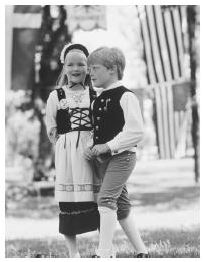
Swedish American children 


An article written by Mark A. Granquist in the Countries and their Cultures forum. He writes about the various periods of immigration from Sweden, who came, why they came, where they settled and the Americans they became. I highly recommend this as an interesting look at Swedish immigration to the US and Swedish Americans. The article can be found if you click  → HERE.


Oct 9, 2017

Leif Eriksson - The First European in North America


Today, Columbus Day is observed. 
As a kid it was always nice to have the day off ...but
all good Scandinavian/Americans know
LEIF LANDED FIRST
and that's all I have to say about that.


check it out↓↓


Jul 28, 2017

America's forgotten Swedish colony


“New Sweden was the last of the European 
colonial empires to be founded in North America”
from History.com click and read about ↓


Oct 9, 2016

Leif Eriksson - The First European in North America


"In 1492, Columbus sailed the ocean blue".
He certainly did but he was about 500 years too late to "discover" the Americas.
We know Leif Eriksson was here first!

 to all my Scandinavian-American Family and Friends
Happy Leif Eriksson Day!


**click on illustration to enjoy a short you-tube presentation**

Sep 9, 2016

The 37th Annual Scandinavian Day Festival


35W217 Route 31
Elgin, Illinois


This coming Sunday September 11, 2016
10am to 6pm
35W217 Route 31, Elgin, Illinois
for more info click ↓


A good time in a beautiful park setting along the Fox River.


Aug 27, 2016

Swedes in the Northwest

free clipart
www.phillipmartin.com


Although our immigrant Swedish ancestors headed for Illinois, many of their descendants ended up out west. I've been trolling the internet again and did you know?


"by 1910 nearly 25 per cent of all residents of the State of Washington who were of foreign extraction were either Danes, Swedes or Norwegians. This amounted to more than 12 per cent of the state's population. Nearly one-fourth of them had come directly from Europe while the rest were "second stage" immigrants from Minnesota, Wisconsin, Illinois and Iowa."


An interesting read I thought would be of particular interest to you family out West.
an excerpt from the Pacific Northwest Forum

by Ray E. Osterberg

give it a click and a read, I think you will find this interesting......I did.


Aug 15, 2016

Have you ever wished you knew a little Swedish?

The little (and I mean miniscule) bit of Swedish I know I picked up from my genealogy hobby, looking at old Swedish records. The fact that I know född, gift, död, begraven (born, married, dead and buried) really does not come into much demand in everyday life. The few phrases from childhood maybe only a bit more. Tack för maten ( thanks for the food) and one phrase I heard a bit and for good reason (then as now I am a talker) tyst med dig! (be quiet!).

If you are planning a trip to Sweden or if you are just interested in learning some of the basics of the Swedish language I found this great free website.  Give it a try?


Jun 22, 2016

Sweden in America - a free app

Isn't technology great? I thought there was not another app for my phone or tablet that I could possibly need let alone want.  I already use and love the one that marks your car with  GPS. No more losing it at the mall! The Ancestry.com's shoebox app had proved very useful to me. Take a picture of a family photo with your phone camera and upload it directly to your family tree. The app that tells you the cheapest gas in the area. Who could do without that?

I follow Nordstjernan, the "Swedish Newspaper of America", and found an app to keep me up on all things Swedish in America! A FREE app. Sounds like a must-have to me.
from their website...

"The Sweden in America app allows you to find a location or a supplier for Swedish or Scandinavian specialty foods, products or a group to meet up with in the U.S. Search a location, destination or a product name - from Marabou to knäckebröd, from Scandinavia House, New York or Wisconsin, to the Swedish towns of Kingsburg, Rockford or Bryn Athyn. Cities, cafes, restaurants, hotels, museums, schools or stores ... Search for ANYTHING."

Just installed it so I can't really review it as yet but first thing I am going to look for is that pearlized sugar for Swedish cinnamon rolls. First things first, ya? Then check out any Nordic festivals within my area this summer.

Interested?  


May 3, 2016

Tuesday Trivia

I am sure that most everyone knows that the IKEA stores originated in Sweden (As if the massive blue and yellow building, flying the Swedish flag, wasn't enough of a hint).
But the "goofy sounding" names of the products for sale in IKEA?


DID YOU KNOW?

IKEA names 
sofas, coffee tables and bookshelves after places in Sweden; 
beds, wardrobes and hall furniture after places in Norway; 
carpets after places in Denmark; 
dining tables and chairs after places in Finland;
bathroom articles after Scandinavian lakes, river and bays;
kitchens after grammatical terms;
chairs and desks after men's names;
fabrics and curtains after women's names;
etc. etc. etc.

Maybe its some sort of an inside Swedish joke that I don't get. 

Here is Valby Ruta in my family room (I'm not sure what that is under the couch) and here is Valby Denmark. and Ruta? what? where is that? couldn't find it. 

Okay. I still  don't get it.   But I like the rug. 


Apr 19, 2016

Tuesday Trivia


It is well documented that over a period of 80-some years from 1840 to the 1920's some 1.3 million Swedes left their homeland and emigrated to the United States.
BUT,

DID YOU KNOW?

"Return migration was also part of the Swedish patterns. Approximately one fifth of the immigrants returned to their homeland. Re-migration was especially strong towards the end of the emigration era, and was more common among men, urbanites, and persons active in the American industrial sector."*

I would think that perhaps some men came to America with the specific intent to make some money to take back to family in Sweden, maybe to purchase land. Unfortunately, I also think that for some, the "American Dream" was only .....a dream. 


Sep 10, 2015

Why Chicago?

Walking down the streets of Chicago today you will meet many immigrants. I'll bet none of them however will be Swedish. It was a different story when my grandparents came to Chicago in the early twentieth century. But why did they choose Chicago?

Swedish immigration to America had been at its highest level from 1850-1880. The Homestead Act  provided fertile and inexpensive farmland ($1.25 an acre) to any squatter willing to work it. Swedes were actively encouraged and welcomed to populate the rich farmland of the Midwest. Whole families left Sweden to establish a farm of their own. At the turn of the twentieth century the good farm land was taken or more expensive but the industrial revolution was in full swing and the draw was now to the cities. It was young singles who arrived daily now. Men with skills (Rikard was a blacksmith) or just a strong back could find lucrative work in cities. Young women that could only hope for a husband or life as a lowly milkmaid were welcomed as educated servants who were relatively well paid and now had money of their own.

Chicago @ 1915 State and Washington Street (Marshall Fields)

Chicago was one of the popular places for these young people to go to. Scandinavian immigrants were generally able to read and write, many of the men were skilled iron workers, carpenters or other tradesmen of some sort, known for their work ethic. Young Swedish women were prized as domestic workers. They blended well and became "Americanized" quite quickly. They were proud to do domestic work that many young American women looked down upon and they did those jobs well. Immigrants generally followed and settled in the same area as friends or relatives who had come before. Chicago had a large Swedish population at the turn of the twentieth century. It is said that only in Stockholm were there more Swedish born folk than in Chicago. The Swedish neighborhoods of Chicago  were complete with Swedish stores, newspapers, churches, restaurants, social clubs. It was possible to live most of your life in Chicago and only hear Swedish being spoken. In fact, my father, born in Chicago, once said that he spoke no English until he went to school. Swedish neighborhoods tended to overlap with ethnic groups not unlike themselves such as Norwegians and Danes. When my Swedish family arrived in Chicago, Swedes generally had located to three North Side Neighborhoods: Lakeview, Andersonville and North Park. My father graduated from Lakeview High School and I was born in the Swedish Covenant Hospital. 

With the Stock market crash of 1929 the influx of Swedes ended. In the next few years and during the Great Depression, in fact many even returned home. Now in the 21st century there is really no longer a Swedish immigrant population in Chicago although there are many who can point to Sweden as part of their genetic makeup. Sweden is a wonderful place to live, quite unlike what it was 100 years ago. Andersonville is now populated with other ethnic groups. The Swedish American Museum, a few Scandinavian shops and names of streets, schools, hospitals and buildings are left to tell the story of how at one time it was said that "The Swedes built Chicago".

Here are a few websites with information on the Swedish influence in Chicago.

NORDIC IN CHICAGO

THE ENCYCLOPEDIA OF CHICAGO: SWEDES

THE SWEDISH AMERICAN MUSEUM

THE SWEDISH AMERICAN HISTORICAL SOCIETY


                                            **clicking on photos or documents will enlarge them for easier viewing*

Jul 27, 2015

Swedes in Chicago

In 1910 Stockholm Sweden was the only city with more Swedish-born inhabitants than Chicago, Illinois.  I just stumbled across this this morning and I am surprised I have never come across this before.

The Encyclopedia of Chicago
presented by
Chicago History Museum, The Newberry Library, and Northwestern University


The entire site is a treasure-trove of information on Chicago worth spending a good chunk of your morning on. I did.  I have bookmarked it as one of my favorite links. Reminds me..I haven't been to the Chicago History Museum in a number of years. I have got to get down there.
click below to see the section on the Swedes in Chicago.